Almost every business we work with arrives with the same problem, in a different shape.
The evidence, not the adjectives.
Six things from the case studies. There are over a hundred more clients behind them that never made it onto the site.
12.5 million deliveries
Recorded on Round Control by 2020. We built it for our first ever client, web platform plus native iOS and Android apps, starting in 2017.
Ten minutes to ten seconds
Ecomotive planned vehicle deliveries by hand. We replaced that with an AI planning engine and a custom CRM.
One school to eight territories
Swish of the Curtain's system was re-engineered for franchising, with every payment split between franchisor, franchisee and platform.
Works with no signal
RiskZen surveyors complete fire safety assessments offline in basements and stairwells, then sync when they're back in range.
White-labelled by multinationals
Satori runs as a private instance for each corporate client, under their own branding and built to sit inside their own network.
Live in a global bank
Middleware we built connects two enterprise systems in a must-not-fail environment. We aren't allowed to name the client, which is rather the point.
The people you'll actually work with
These are the people you deal with directly. Behind them sits the wider JDD team — UI and UX design, back-end and front-end development, and a dedicated QA function — brought onto a project as the build needs them.
Five commitments we make on every project. Hold us to them.
We scope before we build
Every project starts with a written specification that belongs to you. Take it to another developer and it still works.
We tell you when you're wrong
If the thing you've asked for won't do what you need, you hear it before we quote, not after we've billed.
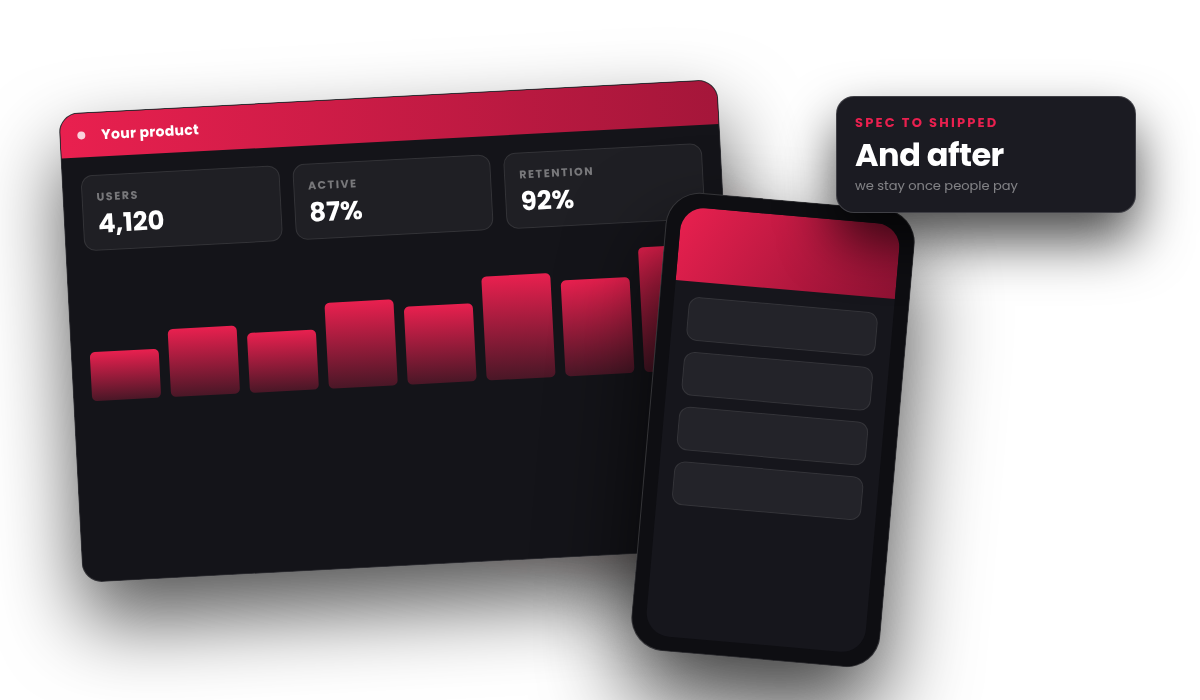
We stay after launch
Most of the systems on our work page went live years ago and we still maintain them for the clients who own them. Launch is the start of the job, not the end of it.
We build it to be handed over
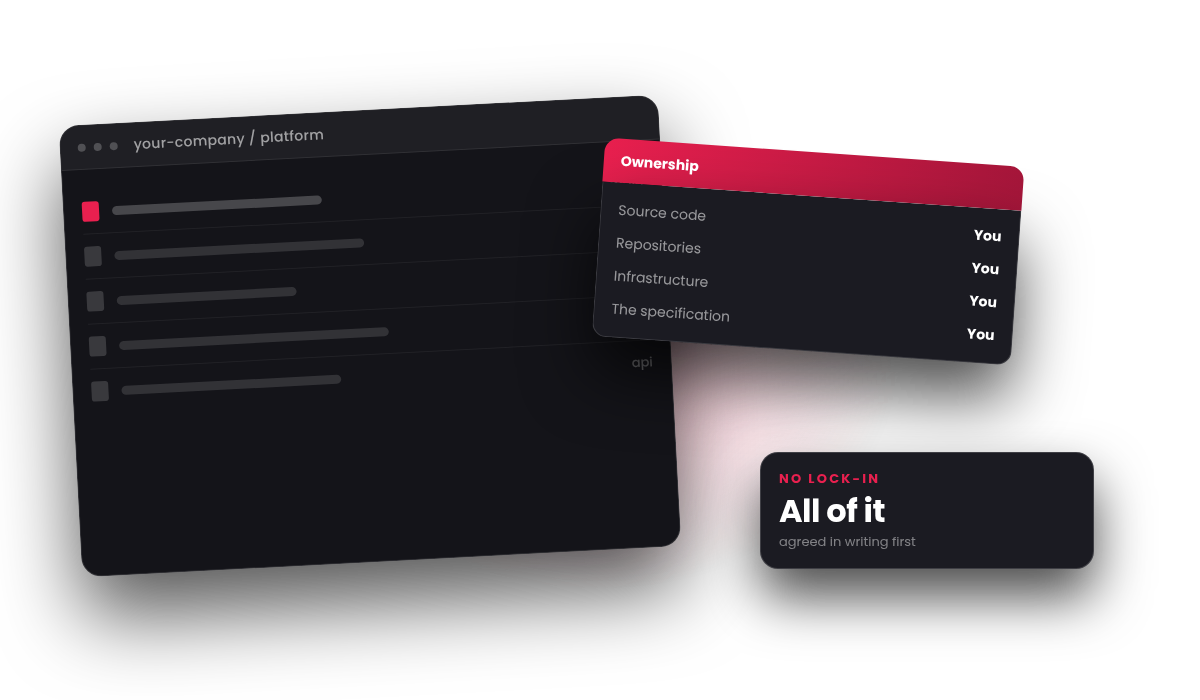
Your code, your repositories, your infrastructure, documented and tested so another team could pick it up tomorrow.
We work in the open
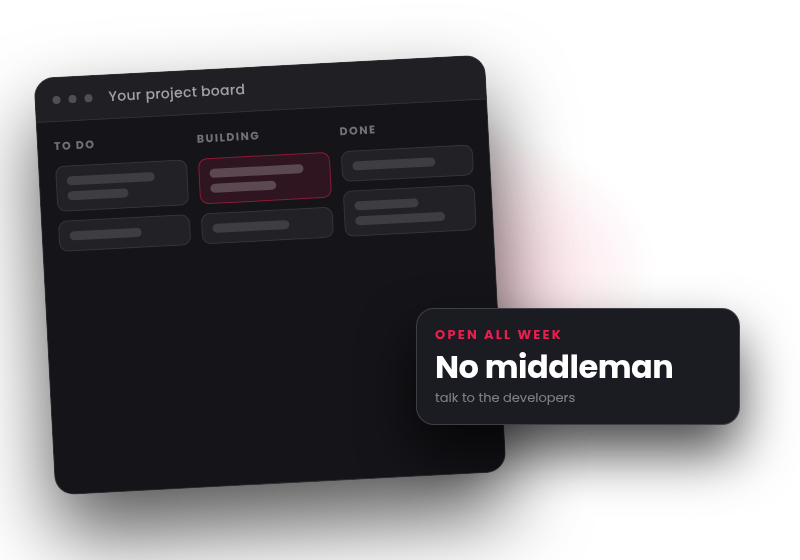
A live board you can see at any time and direct access to the developers writing your code. No account manager in the middle.
Client feedback in their words
Our reputation is built on delivery, not promises. We value long-term partnerships that drive tangible value. Read what the executives and operations managers we work with have to say about the impact of our software engineering.
5.0
"We were impressed by their ability to develop quality deliverables with utmost confidence. The project was successfully completed on time and is currently in live use with a global banking client and meeting its expected accuracy requirements in a 'must not fail' environment."
Tony M.
Director
4.9
"JDD Agency was very personable and understood our objectives clearly, offering some great ideas to help transform the original vision into something much better."
Paul Marsh
RiskZen
4.9
"To date we have achieved a full restructuring of the way our business manages its clients and associates tasks creating huge efficiencies which previously didn’t exist."
Alex Eames
Helpbox UK Operations Manager
4.9
"JDD were very professional and helped us solve issues relating to CRM, ERP and Zebra Scanners. We will definitely be using them again."
Andy Long
A2C Services
Nine years, and the systems are still running.
Every year on this list has software from it still in daily use.
Not a list of launches. A list of systems people still log into every morning.
2017
JDD starts as a senior software engineer and a small team of developers, and the aim from day one is software. The first client comes through the website in the October and signs in November: a distribution business that needed delivery rounds planned, assigned and tracked. That became Round Control.
2018
Round Control ships as native iOS and Android apps alongside the web platform, first iOS build in March, on Google Play by May. We were writing mobile apps in-house well before that was normal for an agency our size, and that field-tool work has run through everything we've built since.
2019
The work shifts from single builds to long-term platforms. We build our first accountancy practice management system, replacing an admin process that lived in email threads and spreadsheets, and the client list grows quickly, most projects from these years have never made it onto a case study page.
2020
We built and deployed an HR and recruitment system for Covid-19 testing sites across the UK, on deadlines measured in days. It settled the question of whether we could ship enterprise-grade software at speed without cutting the corners that matter.
2021
The Garden Society and MEplace both took Honourable Mentions at Awwwards. Useful proof that serious backend engineering doesn't have to come at the cost of the interface people actually touch.
2023
Two of our biggest builds went live in the same year: RiskZen, a fire and safety assessment platform that works on site with no signal, and a financial reporting system consolidating figures across the schools in a Multi-Academy Trust.
2024
Swish of the Curtain went from a system for one drama school to a franchise platform running eight territories, with every payment split three ways through Stripe Connect. Satori shipped the same year as a white-label product, deployed inside multinationals under their own branding.
2025
Ecomotive's quoting process went from ten minutes to ten seconds after we replaced manual planning with an AI engine. We also finished a platform for a global bank we aren't allowed to name.
2026
The platform we built for Swish of the Curtain becomes Enrol.io, a product our client now takes to market in its own right. Nine years in, the pattern hasn't changed: build the thing a business runs on, then stay and keep it running for them.
Two kinds of problem we're good at.
Both start the same way: working out what the business actually does before anyone writes code.
You've outgrown your tools.
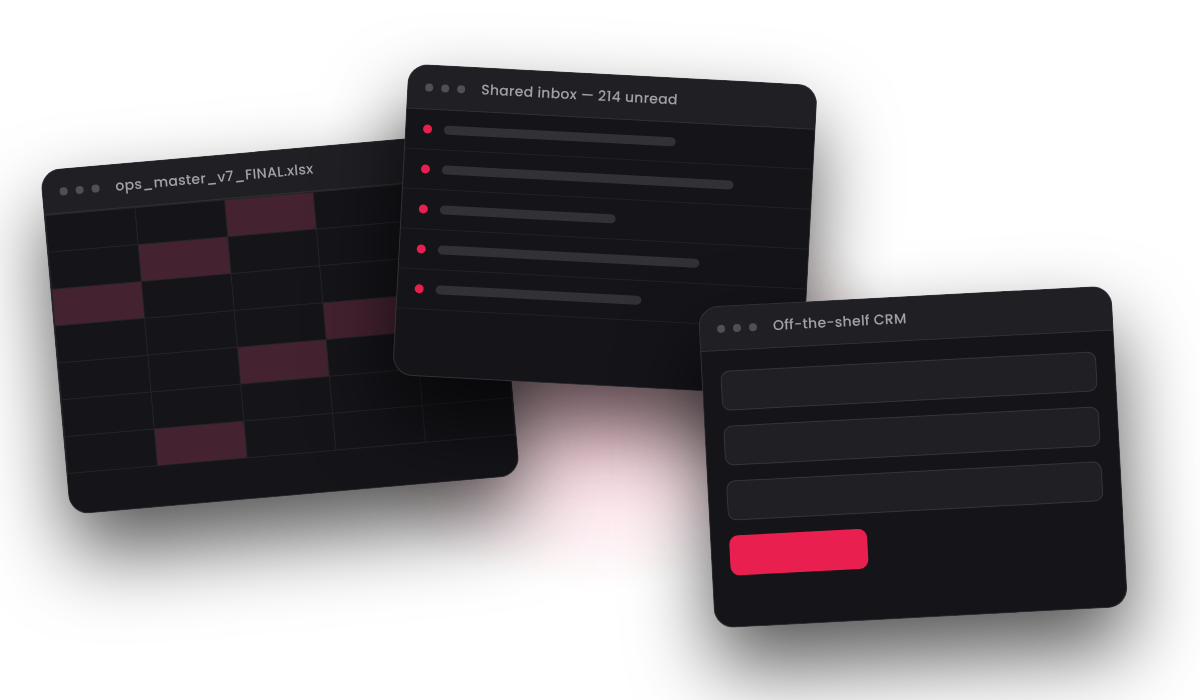
Spreadsheets holding the business together, a CRM bent into a shape it was never meant to take, four systems that don't talk. We replace them with one system, built around how you actually work rather than how the software would prefer you to.
You need a product built.
You have the domain knowledge and the customers. What you need is a technical team that can take a product from a specification to something you can sell, and that is still there once people are paying for it.
Either way, you own it.
Scope agreed in writing before anything is built, your code in your repositories, and a team that's still around in three years. Most of what we've built we still maintain.
Reviewed by the people who use what we build.
Our Clutch badges come from verified client reviews, not from entering competitions.
See the systems, then tell us about yours.
Nine case studies, from a fire safety app that works with no signal to a platform running inside multinationals. Each one says what we built, why, and what changed.