
Workforce Management Platform for MG Traffic
A traffic management company running test sites across the UK, growing faster than its admin could follow. We built the system that took on applications, onboarding, site communication and weekly pay.
Growth that arrived faster than the paperwork
MG Traffic was managing testing sites across the UK and taking on people at a rate most companies never experience. Every new site needed marshals; every marshal needed to be recruited, vetted, onboarded, told where to be, and paid for the hours they worked. The operation was strong. The admin behind it was a legacy system and a very full inbox.
They wanted a technical partner rather than a supplier, so we worked with the management team on a plan to evolve what was already in place: keep the operation running, migrate the data, and replace the manual steps one at a time in the order that bought back the most hours.
The result is a single workforce platform covering applications, onboarding, attendance, communication and pay. The sections below are the pieces that mattered most.
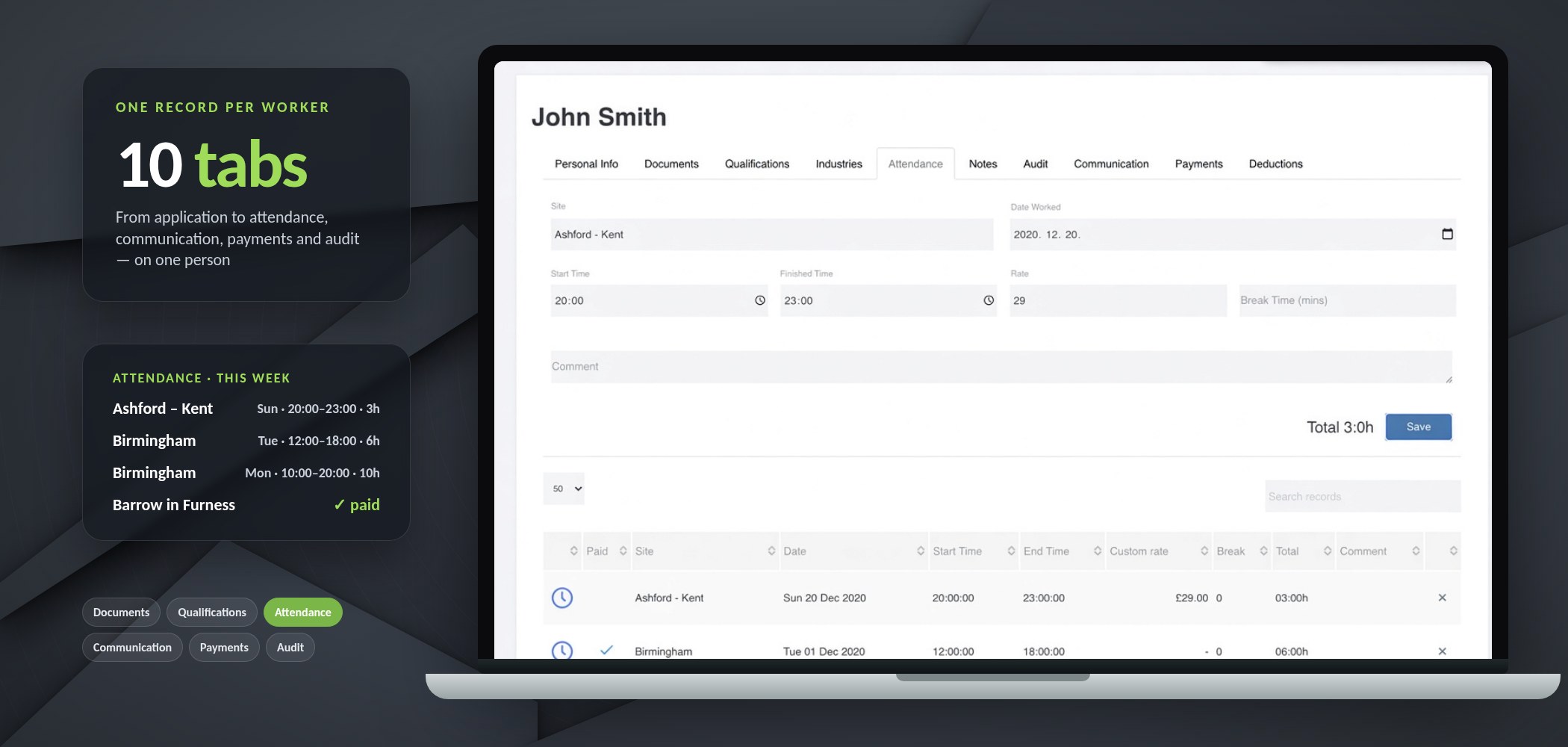
Thousands of applications, handled in groups
The first problem was volume. Applications were arriving by email in their thousands, each one carrying personal data that had to be stored properly and a set of documents that had to be checked. Processing them one at a time was the bottleneck on how many sites MG Traffic could open.
We migrated the existing records out of the legacy system into a new application built for the job, then added what the old one could not do: applicants managed in groups. A batch of candidates for a new site can be invited, progressed, chased and approved together, which is where most of the time saving came from.
after unique application links · applicants processed in groups · documents stored against the record
outcome application admin time massively reduced; recruitment keeps pace with new sites
Each applicant receives a unique link to their own application, so what comes back is structured data and files attached to a record, not an email to be read and re-keyed.
That record follows the person through the rest of the platform: qualifications, industries, attendance, payments and deductions all hang off it, so nothing is entered twice.
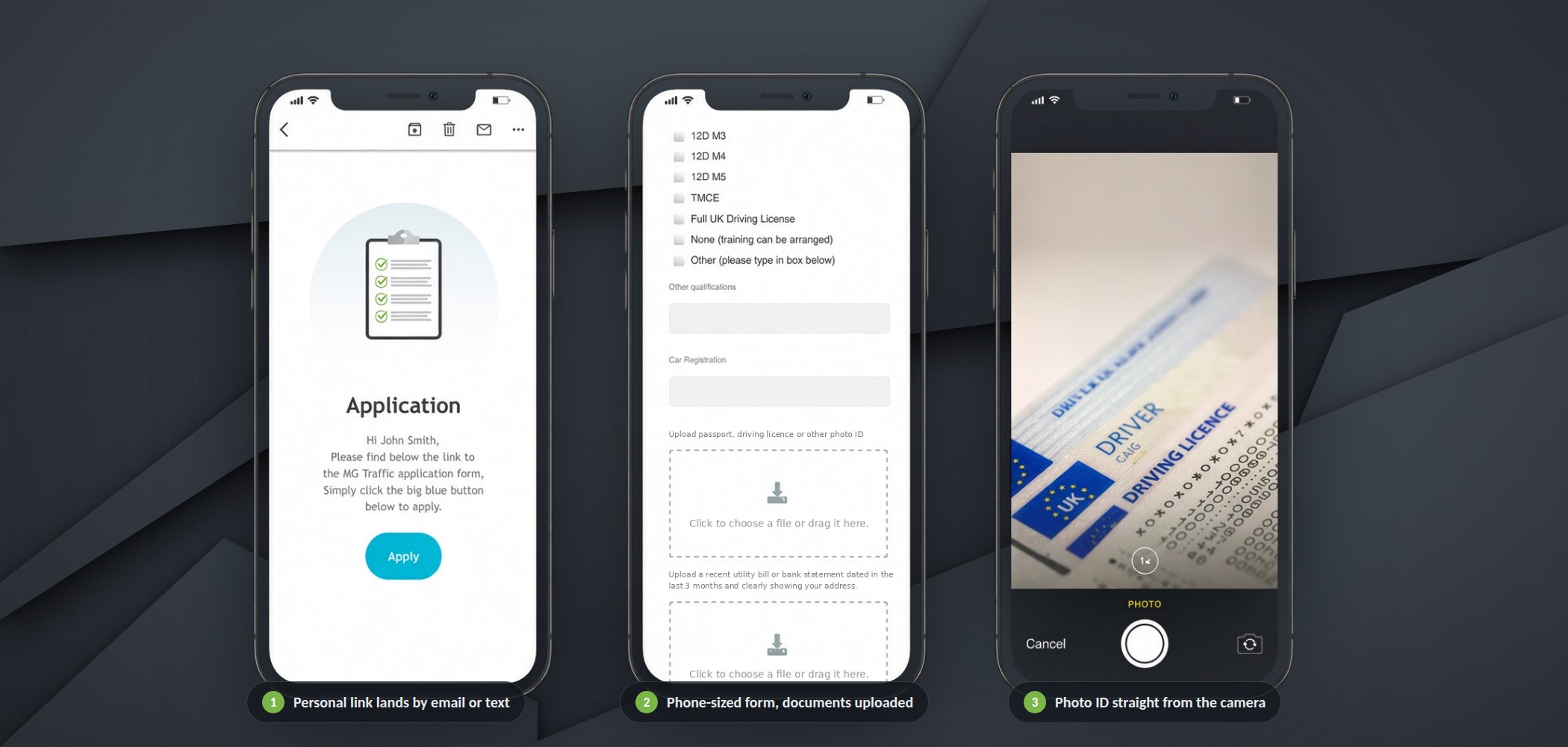
Applying from a phone, documents included
The people MG Traffic recruits are not sitting at a desk. They are applying from a phone, often the same day they hear about the work, and they need to supply identity, right-to-work and payment details along with the documents that prove them. If that is hard to do on a phone, applications stall.
We designed the application process mobile-first: a link in an email or text, a form that works on a small screen, document upload from the camera roll, and the whole thing stored securely against the applicant’s record the moment it is submitted.
A form to print, fill in and photograph, sent back by email with documents attached in whatever order they arrived.
A personal link, a phone-sized form and document upload in one pass, landing as a complete, checkable record.
One message, every marshal on site
The most common thing we find in a fast-growing business is communication running through too many channels. Site details, shift changes and reminders were going out by text, email and phone, from several people, with no record of who had been told what.
Communication with marshals moved into the platform. SMS and email are integrated, so a message to a site’s workforce is sent once from the record it relates to, and every message sent or received is logged against the person. Three separate tools became one screen.
The time saved is obvious. The less obvious gain is the log: when a marshal says they were never told, the answer is on their record.
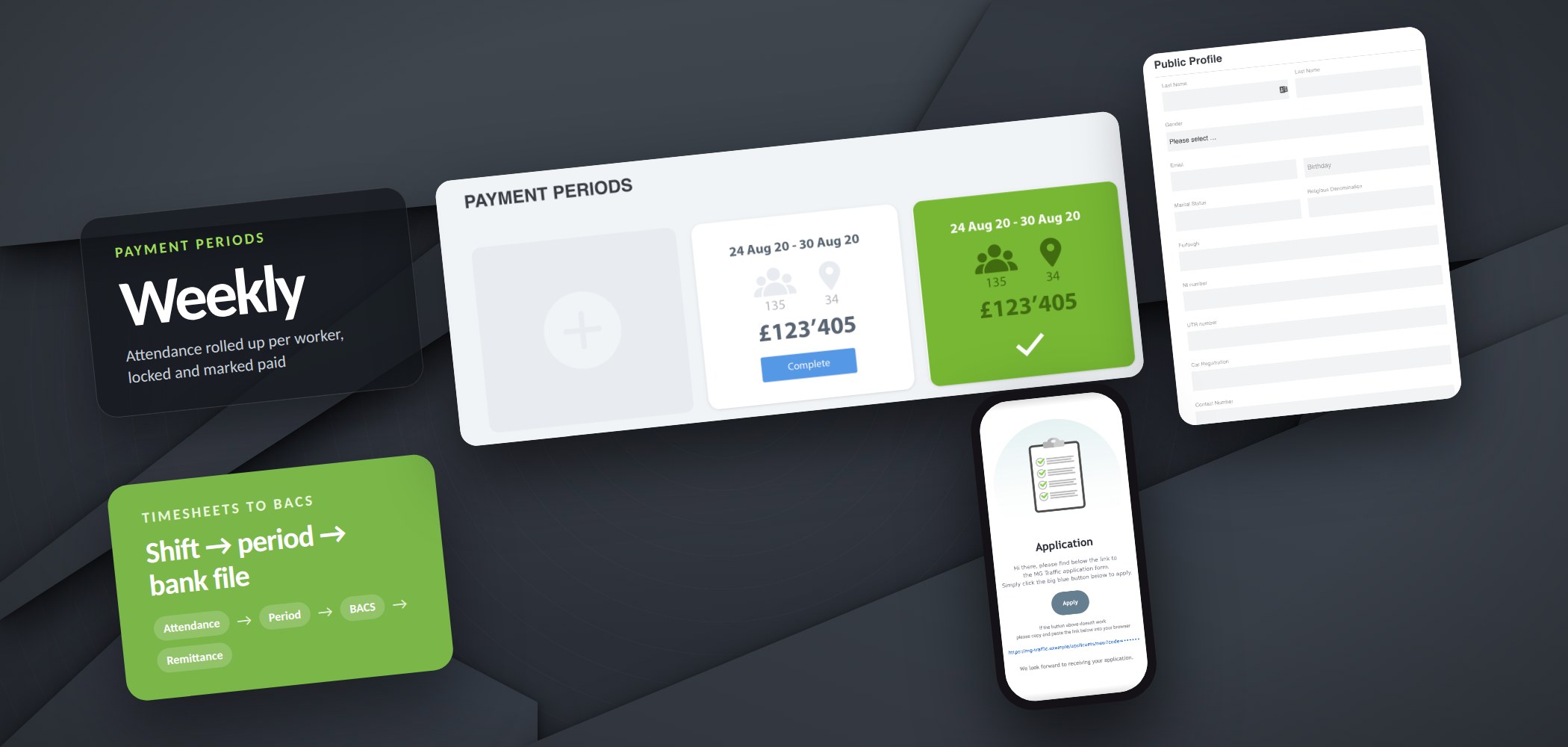
Timesheets in, BACS out, every week
Hundreds of contract workers, different rates, different sites, breaks and deductions, paid weekly. Attendance is recorded per shift with start and finish times, rate and break, and each payment period rolls those records up into a single figure per worker and a BACS file for the bank. Once a period is complete it is locked and marked paid.
Hours collected from sites, consolidated by hand into a payroll spreadsheet, then re-keyed into a bank batch every week.
Attendance records become the payment period; the period becomes the BACS file. Remittances are published to each worker’s own login.
Every contractor can see their own history of remittance documents, so the questions that used to come back to the office after payday mostly stopped arriving.
Personal data, handled like it matters
A workforce platform holds the details people care most about: identity documents, National Insurance and UTR numbers, bank details, qualifications. Part of the brief was to let MG Traffic scale securely, not just quickly.
Data moved out of email attachments and the legacy system into one place with controlled access, and every worker record carries an audit tab so changes to sensitive fields are attributable. The mobile application flow was designed so documents go straight into storage rather than through an inbox.
None of this is visible to a marshal on site, which is the point. It is the difference between a company that grew fast and one that grew fast without a data problem behind it.
Where it stands
We continue to work closely with the MG Traffic management team as they grow across the traffic management industry, extending the platform as the business finds new areas to apply it.
Their commitment to using technology to push the business forward is what made the pace possible. We built the system; they were willing to run on it while it was still being built.
Scaling a workforce faster than the admin can cope?
Recruitment, onboarding, communication and pay are where growing operations lose their hours. We build the platform that takes them back, while the business keeps running.
.avif)